Susan Powter delivered Uber Eats just three days ago.
That alone isn’t shocking — many people work in food delivery. What’s surprising is remembering that Powter’s “Stop the Insanity!” infomercials were so wildly successful in the 1990s that her business generated $276 million in its first year.
“It was a crazy phenomenon,” the Australian-born, U.S.-bred personality, now 67, tells me in conversation for Yahoo's Unapologetically series. “It was a thing that had no chance in hell of happening, and then it broke every record. [Nobody] saw it coming.”
A young mom who created a high-octane exercise and nutrition regimen to shed weight after her divorce, Powter became an original fitness influencer, inspiring millions to eat healthy, organic food and get moving. Then it came undone. The blond, spiky-haired wellness enthusiast fell into financial ruin as the fortune she amassed was lost through years of mismanagement and legal disputes. By 2018, the two-time divorcée — who came out in 2004 — was living in a Las Vegas welfare hotel, having long disappeared from the public eye.
Powter’s rise, fall and current rebirth are at the heart of the new documentary Stop the Insanity: Finding Susan Powter, executive produced by Jamie Lee Curtis, which is now streaming. While the money is gone, her signature enthusiasm remains — and so does her drive to make a comeback.
“It's been a tough run,” says Powter, who also authored And Then Em Died ...: Stop The Insanity! A Memoir. “[But] I survived. I’m surviving. People are shocked when they see the documentary. There's a whole story here about the empire that was ‘Stop the Insanity.’”
In our chat, Powter opens up about what she learned from losing everything — and trying to rebuild, dollar by dollar, in her 60s when nobody wanted to employ her. She also gets candid about being a woman deemed “too much” from the very start — and why her famed hairstyle became “the bane of my existence.”
Talk about being a woman branded as “too much” and “too loud” in the ’90s. How did that shape your sense of self?
Being too loud and too much, that's been my whole life. As a 10-year-old [at] a Dominican Catholic convent in Sydney, Australia, my report card [said], “She's a lovely young girl — if only she would stop talking as much.” Then I was paid to talk. So it enrages me when I hear that a woman is “too much.”' It’s a contradiction in terms. I don’t think women are anywhere near enough. We need women to be much more. Be too much — way too much.
But it’s hard. It’s isolating. I'm aware of my energy and my voice. I’m not rude. I don't walk into a room [trying to] disrupt it. But I know my boundaries — what I'm good at, what I'm not. I don't want to disrupt your committee meeting, and my energy doesn’t work for the PTA. One of the things Jamie Lee [Curtis] made really clear to me — respectfully, and I appreciate her for it — is “Our energy is a lot, Susan.” It’s a lot — and it's very lonely at times.
What has it meant to have Jamie Lee Curtis championing your documentary?
I told her this last night — she threw me a lifeline. To have a woman like Jamie Lee be the executive producer and believe in you [is a privilege]. It’s like: You survived it, kid. Come on, tell the story. Let's go. She gave me a chance to work again, to live. Maybe more than that, she validated that it's OK [that people make mistakes].
If you had said to me two years ago, “There's going to be a movie [about your life],” I would have said, “You're out of your mind.” … She made it possible. [I feel] gratitude, gratitude, gratitude.
Finding work in your 50s and 60s has been a hurdle — not just because people assume you’re wealthy from past fame but because many don’t want to hire someone your age. What has that experience taught you?
You meet me in person and you know that I've got energy and I'm smart. You don't see that on paper. At 55 [they said], “No.” At 60, “No.” Now I'm 67 and there are so many more noes. Any person who ages, but especially women, it's like: She's too old. It's disheartening and scary, [for] every woman especially. The kids are grown … you’ve got to pay your bills, but the possibilities narrow.
And I still drive for Uber Eats — it’s not “used to.” A lot more is possible now [because of the film] and maybe I’ll have a chance to do other things. But I'm still driving because I will work and pay my bills. Nobody ever paid my damn bills.
Let’s talk about your hair. In the documentary, you have a hair transformation, which people will have to watch to see. But your hair — short, blond, spiked — has always been a standout part of your image.
My hair has a story of its own. In Dallas in the ’80s, before “Stop the Insanity,” people used to throw things at me. When you had hair this short as a woman, there was Brigitte Nielsen, Sinéad O'Connor, and that's it. When I went to pick my kids up at school, it wasn't popular. “Your mother looks like a boy.” It was the hair everybody said no to. [I was told], “Maybe if she grew out her hair, we’d do a deal. She looks crazy.” It worked against me in every way.
The only reason I do what I do to my hair is because I have the worst hair in the history of the world. The only time my hair has any volume is when I fry the hell out of it. That's why I did it — and I did it myself. Never went to a hairdresser. I just bleach it. I still do. In the ’90s, everybody thought it was a deliberate, brilliant marketing plan because I became known for it. Not at all. It was the bane of my existence.
I think people will be curious about your tattoos — I know I am. When did you get them, and what do they represent?
First of all, I'm going to get a lot more. I haven't been able to finish them because I didn't have the money. It’s obviously not a priority to spend $300 on a damn tattoo when you gotta eat.
[This one on my chest] was done in Portland. The artist did it freeform — a vine. I'm going to add to it — a big bleeding heart and a whole thing. So one of the first things I'm going to do is finish this. [The one on my hand] is a rosary, because I was raised in a Dominican convent, and it's a symbol of those memories. People say, ‘Don't get [a tattoo] on your hand as you age.” This was done 25 years ago. They were done so long ago [that] I forgot about them for many years. But there's gonna be more tattoos — you can bet on that.
Your sons don't appear in the documentary, but they gave you their support. How has motherhood driven you both in the choices you've made and your resilience?
My children [arent in it] because it's not a story about them. It's a story about a woman. It's not even a story about a mother. I'm the head of the household. It's me and the boys. I'm a single mother by choice of three children. [Losing everything] was a seismic shift. It's embarrassing and sad and frightening sometimes, and shameful. It's hard [for them] to see that.
But I didn't impose on them. People say, “Why didn't you move in with one of your sons?” When your son’s in a condo with a brand-new baby, would you want to have your mom move in because she's broke? You would do anything to avoid that. That's why I work day and night. When I needed it — if the car broke down — of course they paid for it. When I needed to get out of that welfare hotel and into an apartment, my son got me $3,000 so I could put down the extra security deposit. I'm very grateful, but I'm not an imposing mother.
Now they’re so proud. My oldest son says to me all the time, “This is such a great story, Mom. I'm so glad you get to share the truth.” We got a new chapter. Mom's gonna do it again — and this time, she'll check the damn bank account.
What advice would you give to young people about finances, especially protecting themselves?
First of all, I would never hand out financial advice because I didn't do a very good job. So I'm not going to be a jerk like, “This is what you should do.” Here's what I would say to everyone — young, old: Whatever you have, see it as a window that can close. Set yourself up first. Nobody thinks about when you're 67. Nobody thinks, My teeth will go. Then if things change, you're not destitute.
“Stop the Insanity” generated $276 million in the first year of business. I was the only revenue generator — unheard of for a woman with no degree, just telling people: “Listen, you can get fit.” To see that that enormous amount can go — in lawsuits and padding bills and expenses — [is shocking]. Sure, I made money, but I was working like a racehorse. [Working], going to the baseball games, commuting to L.A. What the hell are the accountants for? What the hell are lawyers for? There were 14 lawyers around “Stop the Insanity.” I trusted people to do the job they were paid a lot of money for — and that is a stupid thing to do.
Are there any modern fitness influencers who inspire you?
Influencers … thrill the hell out of me. In 1982, I had two babies a year apart, and then [my husband] walked out and I had no way to make a living. I was screwed. I was nursing two babies, exhausted. So when I see these young women showing their postpartum bodies on TikTok — breastfeeding their babies, showing the diaper underwear that you wear after birth, sharing experiences — I am the biggest rallier of those women. If I had the internet in Garland, Texas, as a young mother, I would have been dangerous. I'm not joking.
I'm proud of the [influencers] saying, “That's ridiculous. Here's the truth.” I'm also really proud of the young gardeners — growing food in their backyards — saying “screw you” to the food industry. I’m not spending $8 on crappy stuff that sat in a warehouse.
You said in the documentary that you thought you'd get a facelift by 55. By then the money disappeared. Where do you stand on that today?
I'm not trying to change anything; I have good bone structure, and I don't do anything. No Botox, no nothing. I can't even tell you the last time I moisturized my face. Am I going to buy $40 worth of moisturizer … when I can't afford to buy a $90 tire and drive for a living? [But] the only surgery I would get — and I'm going to … if everything goes well and there’s extra [money, is a facelift]. That'll be the last damn thing, though. First, I want insurance, I want to pay my bills, I want to have some money in the bank, I want my children's inheritance back, I want to have a career. But if the day comes when … that’s all set, I will have a facelift. One. At 70. Not anytime soon. First, I'd like a life, then I'll get a new face.
This interview has been edited for length and clarity.
LATEST POSTS
- 1
 Forget 'Outer Banks.' These Gen Z-ers just want to watch 'M*A*S*H*' and 'Gilmore Girls.'
 - 2Which '80s Film Actually Holds Up Today?
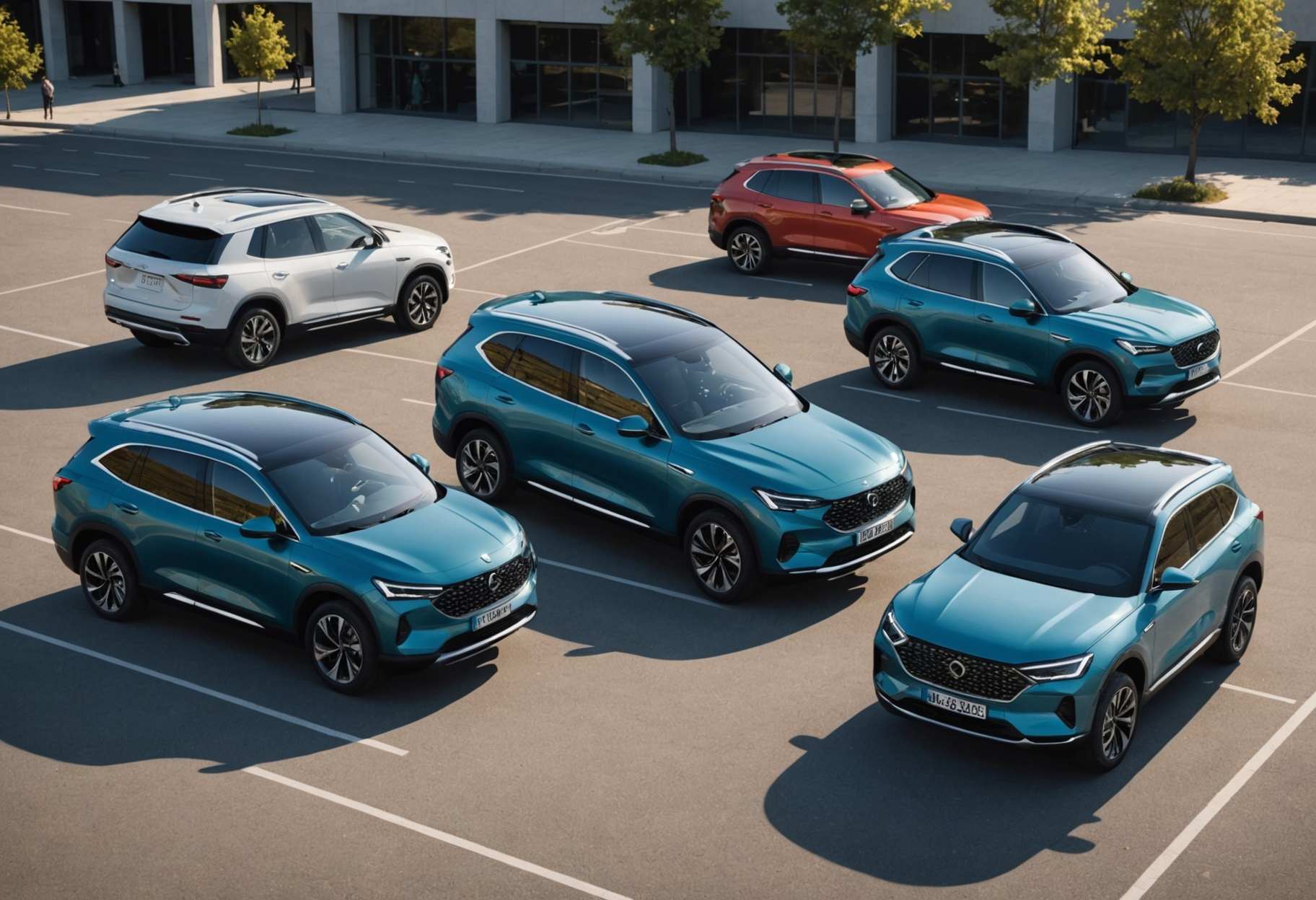
- 3Well known SUVs With Low Energy Utilization In 2024 vote
- 4Astonishing Deserts All over The Planet You Really want To Visit
- 5From Modesty to Administration: Self-improvement in Interactive abilities



- Sentimental tree to shine at Arctic League annual broadcast
- 5 Movies That Leaving an Imprint with Inventive Innovation
- Picking the Right Doctor prescribed Medication Inclusion in Senior Protection.
- World leaders, rights groups react to COP30 climate deal
- The Tradition of Stone: A Gander at Notable Structures Through the Ages
- Manual for Famous Beverages 2024
- Netanyahu leads meeting on West Bank riots, Katz defends axing administrative detention for Jews
- Turkey, Egypt, Qatar discuss second phase of Gaza ceasefire deal
- ‘Trip of suffering’: Gaza evacuee details 24-hour journey to South Africa